Made for the Schedule, Watched by Nobody

Sam Lester
Short on time?
Get a quick summary in your LLM, or watch this article as a Hyperframe.
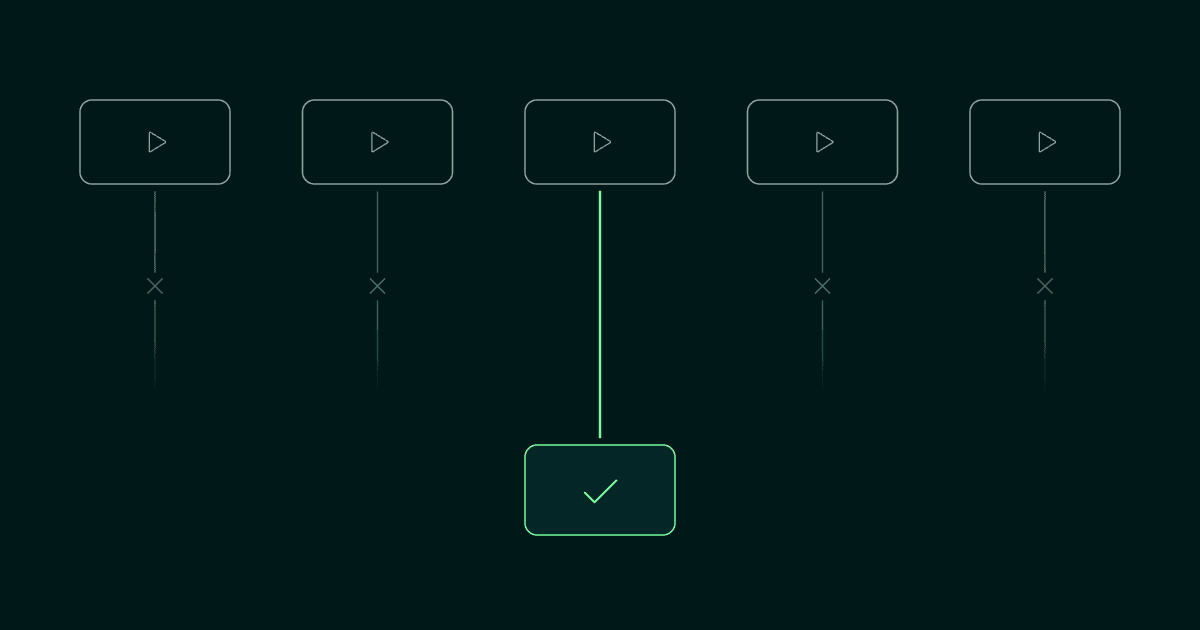
Most internal video gets made because a slide in the comms plan says one is due, not because anyone asked for it. Viewers can tell. The engagement data splits cleanly down the middle: video that answers a real question, and video that fills a slot. Budget barely moves the line between them.
Instructional content holds nearly double the attention, at the same length
Instructional video holds attention far better than average, at the same runtime. Wistia's State of Video data puts average engagement for a three-to-five-minute video at 43%. For instructional, how-to content of the same length, it's 74%. That content also keeps viewers past the five-minute mark, where most video is quietly bleeding out.
Close to twice the audience held, same length, separated by one thing: whether the video answers a question the viewer walked in with.
None of that means turn everything into a tutorial. It means attention follows usefulness, and usefulness is set by the viewer's need, not the schedule.
Video dies in the first few seconds, and longer video dies harder
Most of the audience you lose, you lose before you've said anything. Wistia splits a video into three parts: the nose (the first 2% of runtime), the body (the middle 96%) and the tail (the final 2%). The nose is where the damage concentrates.
Average engagement loss in the nose runs 4.9% for one-to-two-minute videos and climbs to 17.3% for five-to-ten-minute ones. The longer the video, the bigger the share that leaves before it's made a single point.
The causes are dull. A branded intro that plays before anything happens. An opening that never says what the viewer will get. Lose the room in the nose and the body can't win it back.
This is older than any video platform. Ambady and Rosenthal's meta-analysis of first-seconds judgements found people form durable judgements from a few seconds of exposure, and watching longer adds little accuracy. We've written about what that means for an opening. The nose data is the same effect at work: the viewer decides fast, and the decision sticks.
Get the next piece by email.
One email when we publish. Unsubscribe anytime.
The monthly CEO update is the format the data is warning about
The recurring executive update is video made for the calendar, not the viewer. It ships on schedule whether or not there's anything new to say, and it opens on broad framing and thanks to the team before it reaches anything a specific person needed to know. It isn't built around a question anyone asked, so it loses to the content that is.
That doesn't mean executive communication doesn't matter. Some of the most-watched internal video is a leader addressing something specific and slightly uncomfortable: a straight answer on a reorg, a policy change people are anxious about. Same format, different product. Only one of them posts numbers anywhere near the instructional benchmark above.
Video made to fill a slot survives because the people who approve it never watch it
Demand for useful video and the authority to fund it sit in different parts of the org, and that gap decides most of what gets made. In the large firms we work with, the people who want video are on the ground: sales, marketing, team-level comms. The blockers sit elsewhere. Budget. Production teams permanently over capacity. Brand review that can stall a project for months even when the guidelines were followed to the letter.
The people who sign off video budgets rarely use the tools or watch the output. So what gets made is what's easiest to approve, and a standing calendar slot is the easiest thing in the world to approve. It's already in the plan. Nobody has to argue for it. That's how a format almost nobody watches keeps getting funded while the useful video someone actually asked for waits in the backlog behind it.
Build the video around the question, or don't build it
Before you schedule a video, name the question it answers. If you can't, the data already knows how it'll do. Three tests separate a real information need from a scheduling obligation:
- Has someone actually asked this, in a survey, a Slack thread or an all-hands Q&A, in a form the video answers directly?
- Do the first ten seconds make clear what the viewer will know by the end that they don't know now?
- Would you still make it this month if no schedule required you to?
Fail the third and the video tends to underperform no matter how well it's produced, because it's competing for the same scarce attention as the content the viewer actually wants.
There's a production reason the calendar wins by default. When a video takes weeks and a real budget line, you can only justify it on a schedule: planned, batched, approved once. When it takes an afternoon and draws on assets the brand already signed off, you can make it the day someone asks the question, while the question is still live. Cheap, fast, on-brand video lowers the cost of what you already make. It also changes which videos get made at all: away from the calendar, toward the people actually watching.